Why AdBlue Repairs Fail the First Time
Many AdBlue repairs fail because the real fault is never confirmed. This guide explains where things go wrong, what gets missed, and how proper diagnostics stop repeat warnings.
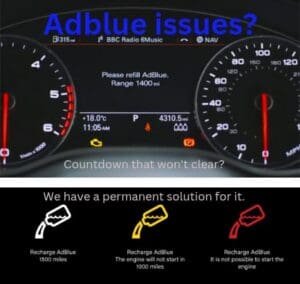
One of the most common calls we get is from drivers who have already paid for an AdBlue repair, only to see the same warning return days or weeks later. In many cases, parts were replaced but the underlying fault was never confirmed.
AdBlue systems are linked to multiple sensors, control units, and emissions checks. If one piece of the puzzle is missed, the repair does not last.
Failed AdBlue repairs often look like
- • Warning clears briefly, then comes back
- • Countdown message returns after a few days
- • A different fault code appears each time
- • Parts replaced but no explanation given
- • Told “it should be fine now” without testing
If this sounds familiar, the issue is rarely bad luck. It is usually incomplete diagnosis.
Why AdBlue repairs fail so often
AdBlue systems do not fail in a single, simple way. Many faults trigger the same dashboard message, even though the cause sits elsewhere in the SCR system.
- Parts replaced based on a single fault code. Codes point to symptoms, not always the root cause.
- No live data checks. Without live readings, sensor drift and false values get missed.
- Ignoring related SCR components. NOx sensors, injectors, and wiring often influence AdBlue warnings.
- Clearing faults without proving the fix. If nothing is tested afterwards, the fault often returns.
This is why many drivers end up paying twice for what should have been a single visit.
The faults that are commonly missed
Many repeat failures come down to one of these being overlooked during the first repair.
Sensor drift
Sensors can read within range but still be wrong. This fools basic scans.
Crystallisation
Dried AdBlue can block injectors or damage seals long before a leak is obvious.
Wiring faults
Heat and moisture cause intermittent faults that only show under load.
How proper AdBlue diagnostics prevent repeat failures
A lasting repair starts with proving the fault path, not guessing it.
- Read fault codes and freeze-frame data.
- Check live readings from all related sensors.
- Inspect physical components for leaks or build-up.
- Confirm the fix with post-repair testing.
This approach is why many faults are resolved in one visit rather than dragged out over months.
Stop paying for the same AdBlue fault twice
If an AdBlue repair has already failed, the next step should be diagnosis, not another guess.
Mobile service across the West Midlands.