
An AdBlue warning on a Mazda CX-5 rarely arrives alone. Here is what the Skyactiv-D system is actually telling you, why power loss so often comes with it, and what to check before you spend money on parts.
Mazda’s own CX-5 handbook makes two points most owners never read until something goes wrong: AdBlue is a 32.5% urea solution that freezes at −11 °C and should not be used more than two years after the production date on the container, or the SCR system may not operate normally. Between those two lines sits a large share of the Mazda CX-5 AdBlue faults we get called out to — systems that are mechanically sound but have been fed fluid the vehicle no longer trusts, or asked to dose while half the tank is still solid.
Which Mazda Models Use AdBlue?
Mazda came to selective catalytic reduction later than most manufacturers. The 2.2-litre Skyactiv-D originally met emissions limits without a urea system at all, which is why plenty of early CX-5 diesels have no AdBlue tank and no filler neck. That changed with the Euro 6d-temp generation, when Mazda added SCR dosing to the 2.2 diesel and gave the CX-5 handbook a dedicated AdBlue section.
The practical test is simple. If your CX-5 has a blue-capped filler alongside the diesel filler, or an AdBlue range readout in the driver information display, it has an SCR system that can fault. If it has neither, an emissions warning on your car is something else entirely and should be diagnosed as such.
The same 2.2 Skyactiv-D architecture appears in the Mazda6 and CX-60 range, so the fault patterns described below are not unique to the CX-5 — owners of the other diesel models tend to report the same sequence of messages.
What the Warning Actually Looks Like on a CX-5
Mazda’s messaging is more restrained than the marque-specific wording used by some European manufacturers, which is part of why it catches owners out. There is no dramatic dashboard graphic. What you get instead is a staged escalation:
- Low AdBlue level with a remaining range — a genuine consumable warning. Topping up with correct, in-date fluid clears it.
- An AdBlue system warning with no range figure — this is a fault, not a level message. Adding fluid will not clear it.
- Restart-prevention wording — the display begins counting down remaining starts or distance before the engine will not restart.
- Engine will not start — the countdown has expired and the vehicle needs specialist intervention where it stands.
The distinction between the first two matters more than anything else in this guide. A level message is about fluid. A system message is about a component, a sensor reading, or the quality of what is already in the tank. We cover the wider warning sequence in our guide to the AdBlue system fault warning and what it means, which applies across marques.
Why the AdBlue Warning Comes With Power Loss
This is the single most common thing CX-5 owners describe: the warning appears, and at the same time the car feels flat, will not pull past a certain point, or drops into limp mode on a motorway slip road.
It is not a coincidence and it is not a separate fault. When the ECU concludes that the SCR system is not reducing NOx as it should, it has two levers: warn the driver, and reduce what the engine is allowed to do. Torque limitation is the second lever. It is deliberately inconvenient, because the regulations behind the system assume an inconvenienced driver books the repair.
The important consequence is diagnostic rather than mechanical. Power loss arriving with an AdBlue message tells you the system has already moved past a passive warning into active enforcement, which usually means a fault code has been stored and confirmed across more than one drive cycle. That is worth knowing before anyone suggests simply clearing the code and seeing what happens.
Whether it is safe to keep driving depends on which stage you have reached. Our guide on driving with an AdBlue warning light showing sets out where the practical cut-off is.

Mazda CX-5 AdBlue Fault: The Three Causes We See Most
1. The Tank Reads Full but the Range Reads Zero
An owner tops the tank up, the gauge shows plenty of AdBlue, and the remaining range still reads zero or refuses to recalculate. This is a sender or supply problem, not a fluid problem. The level sensor sits inside the tank in a fluid that is mildly corrosive and prone to depositing solids around anything it dries on. Once the sender reads implausibly, the ECU stops trusting the tank contents altogether.
Adding more fluid at this point makes nothing better and can make the second fault below worse.
2. The Warning Appears Straight After a Top-Up
An AdBlue message that arrives within a day or two of filling the tank points at the fluid or the fill itself far more often than at a component. Overfilling is the usual culprit — the tank needs headspace, both for expansion and for the sender to work in. Old stock is the other: Mazda is explicit that fluid used beyond two years from its production date may stop the SCR system operating normally, and open containers stored in a warm garage do not last well.
Decanted fluid from an unmarked container is the version of this we see most, and it is the hardest to prove after the fact.
3. Cold-Weather Faults on Short-Journey Cars
AdBlue turns solid at −11 °C. Every SCR system is designed for this and heats the tank and lines on start-up, so a frozen tank is not itself a defect. It becomes one when the heater circuit has failed, or when journeys are short enough that the system never gets a full dosing cycle. A CX-5 used for school runs and supermarket trips through a cold winter is a textbook candidate.
The underlying pattern is not Mazda-specific. We covered why short journeys cause AdBlue problems on modern diesels in more detail, and the same reasoning explains why the fault often appears in January rather than July.
What to Check Before You Book Anything
Five minutes of checking will usually tell you whether you are looking at a consumable or a repair:
- Read the exact wording. Photograph the message. “Low AdBlue” and “AdBlue system” are different problems with different bills attached.
- Look for a range figure. A remaining distance means the system is still calculating normally. No figure means it is not.
- Establish what fluid went in and when. Sealed container, in date, bought recently — or a part-used jug from the back of the garage?
- Note whether power is limited. Derate means enforcement has started and the clock is running.
- Check the filler area for white residue. Dried deposits around the neck point to spillage or an overfill, and the fluid attacks paint if it is left. Our note on cleaning an AdBlue spill from paintwork covers that side of it.
One thing not to do
Do not keep adding AdBlue to silence a system warning. If the fault is a sender, a heater circuit or a dosing component, more fluid changes nothing — and an overfilled tank creates a second fault on top of the first. Get the codes read before the next top-up, not after it.
Your Fix Options
Option 1: Diagnose and Repair the Component
Where the fault is isolated — a level sender, a heater circuit, a dosing injector — replacing the part restores the system to normal operation and keeps the SCR hardware intact. This is the right route for a car under warranty, a car being sold on, or an owner who wants everything left standard. The caveat with any SCR system is that one component failing does not tell you the neighbouring components are healthy.
Option 2: Software-Based AdBlue Delete
A software AdBlue delete disables the SCR system at ECU level so the fault codes, the countdown and the derate all stop. There are no parts to source and no repeat AdBlue costs. It is the route owners tend to choose once a CX-5 has faulted more than once, or when a quote for the hardware repair is out of proportion to what the car is worth. It is a permanent change to the emissions system and should be a considered decision rather than a default one.
Which of the two makes sense is genuinely a case-by-case call, and cost is usually the deciding factor. Our breakdown of what AdBlue repairs cost in the UK gives you the ranges to weigh it against before you commit.
We Come to You
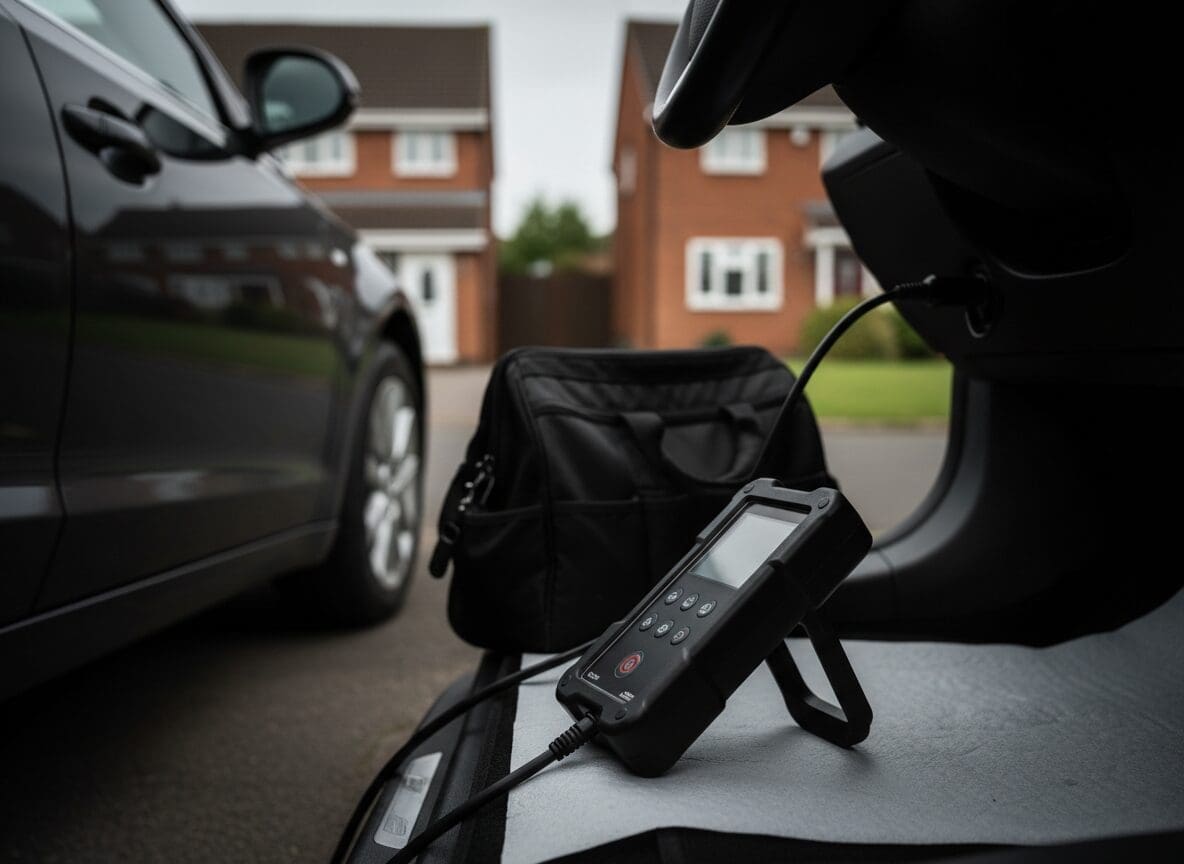
We carry out mobile AdBlue diagnostics and software-based fixes on Mazda CX-5, Mazda6 and CX-60 diesels across the West Midlands and surrounding areas. Contact us with your registration and the exact dashboard wording for a quote.
Mazda CX-5 AdBlue Fault? We Can Diagnose It at Your Location.
Mobile AdBlue diagnostics and repair across the West Midlands and surrounding areas — no recovery, no dealer wait.
Frequently Asked Questions
Does the Mazda CX-5 use AdBlue?
Later Euro 6d-temp CX-5 diesels do. Earlier 2.2 Skyactiv-D versions met their emissions limits without a urea system, so they have no AdBlue tank at all. The quickest check is whether there is a blue-capped filler next to the diesel filler and an AdBlue range readout in the driver display.
Why does my Mazda CX-5 lose power when the AdBlue warning comes on?
Torque limitation is part of the system, not a separate fault. When the ECU decides the SCR system is not working correctly it warns the driver and restricts engine output at the same time. Power returns once the underlying fault is properly resolved — not simply when the code is cleared.
Can I fix a CX-5 AdBlue fault by topping up the tank?
Only if the message is a low-level warning with a remaining range figure. An AdBlue system fault message will not clear with fluid, and repeated top-ups risk overfilling the tank, which creates a second problem on top of the first.
How long can I drive with a Mazda AdBlue warning?
Until the countdown expires, and no further. Once the display starts counting remaining starts or distance, the engine will not restart when it reaches zero — and at that point the car has to be dealt with wherever it happens to be parked.
Can old AdBlue cause a fault?
Yes. Mazda states that AdBlue used more than two years after the production date on the container may stop the SCR system operating normally. Part-used containers stored in a warm garage are a common cause of a fault appearing shortly after a top-up.


