
Repair My AdBlue — AdBlue Fault Specialists
Mercedes AdBlue Reset Without a Scanner: When It Won’t Clear and What Actually Fixes It
Tried the ignition cycle method. Tried topping up. The warning is still on. Here is what is actually happening inside your Mercedes — and the point at which a software specialist is the only thing that will stop it returning.
The question comes up dozens of times a week: can you reset a Mercedes AdBlue warning without a scanner, and if so, how? The short answer is that you sometimes can — briefly. The longer answer is that if the warning keeps returning, no reset method, with or without a scanner, is going to fix the underlying problem. This guide explains why, covers what fault codes like P1BC300 actually mean, and tells you at what point a professional software solution becomes the only way forward.
Can You Reset Mercedes AdBlue Without a Scanner?
Simple ignition cycles — turning the ignition on for 30 seconds without starting the engine — can temporarily clear the AdBlue warning on some Mercedes models after a fluid refill. However, if the fault is caused by a failing NOx sensor, crystallised dosing injector, or low AdBlue pressure, the warning will return within a few drive cycles. A scanner can read and clear the stored fault code, but it cannot fix the hardware fault causing it. If the warning keeps coming back, a reset is not the solution.
What a Manual Reset Actually Does
When people search for how to reset a Mercedes AdBlue without a scanner, they are usually looking for one of two things: a way to clear a warning light that came on after running low on fluid, or a way to stop a no-start countdown that has appeared from nowhere.
For the first scenario — genuinely low AdBlue — the process is simple. Refill the tank to the correct level with a quality fluid, then run a few ignition cycles without starting the engine, or take the vehicle for a steady drive at motorway speeds for 10 to 15 minutes. Many Mercedes models will self-calibrate and clear the warning once the dosing system confirms it has fluid available and is functioning normally. No scanner required.
The problem is that this only works if the fluid level was genuinely the issue. If the AdBlue system is reporting a fault for any other reason — a blocked injector, a failing sensor, low pump pressure — refilling and cycling the ignition does nothing to resolve the underlying fault. The system resets the display temporarily, the ECU runs its next diagnostic cycle, finds the same fault, and puts the warning straight back up.
How to Tell Whether a Manual Reset Will Work
If the warning appeared immediately after running low on AdBlue and cleared after a full refill and short drive: the manual approach worked and you are done. If the warning appeared without any obvious low-fluid event, returned within a day or two of a refill, or arrived alongside a no-start countdown message: there is a fault in the system that needs a diagnostic scan, not another ignition cycle.
Why the Warning Keeps Returning After Reset
This is the most common frustration: the scanner clears the code, the dashboard goes blank, and within 100 km to 500 km the warning is back. Sometimes it comes back harder — with a reduced kilometre countdown attached. What is happening?
The Mercedes ECU runs continuous SCR system monitoring checks during normal driving. These checks measure whether the dosing injector is injecting the right quantity of AdBlue, whether the NOx sensor is detecting the expected emissions reduction downstream of the catalyst, and whether pressure in the pump circuit is within specification. Every time the check runs and finds a discrepancy, it logs a new fault code and — if enough checks fail — advances the no-start countdown.
Clearing the fault code with a scanner does not fix any of those underlying readings. The next monitoring cycle will find the same problem and log the same code. The pattern is almost always: warning → scanner clear → warning returns within a few hundred kilometres.
The Three Most Common Root Causes on Mercedes
Based on the types of calls we receive on Mercedes cars and vans, three root causes account for the majority of persistent warnings that will not clear:
Dosing injector crystallisation. AdBlue is a water-urea solution that turns into solid crystals when it dries in the injection nozzle. The injector still fires but not at the correct volume, so the SCR system detects insufficient NOx reduction. Clearing the fault code does nothing to unblock the injector.
NOx sensor drift. Upstream and downstream NOx sensors degrade over time and begin returning inaccurate readings. A scanner can read and clear the code they generate, but once they start drifting, they drift further with every use. The warning comes back because the sensor keeps reading outside its expected range.
AdBlue pump pressure drop. The pump that pressurises the AdBlue circuit degrades and eventually begins cycling under-pressure. The system monitors pressure and flags low readings as a fault. Resetting the code does not restore pump pressure.
What P1BC300 Means on a Mercedes
P1BC300 is a Mercedes-specific fault code indicating a malfunction in the SCR NOx sensor circuit — specifically a fault associated with the upstream or downstream NOx sensor signal being outside the expected calibration range. It is one of the more common codes that appears alongside persistent AdBlue warnings on Mercedes E-Class, C-Class, Sprinter, and GLE diesel models.
The diagnosis of P1BC300 on a Mercedes — whether a 2016 E350d or a more recent Sprinter 316 — involves checking the wiring harness, connector corrosion, and the sensor itself. If the sensor has been replaced but the fault returns within 100 km, as documented in specialist repair records, the issue is often one of incomplete adaptation rather than a second faulty sensor. The ECU requires an adaptation drive after sensor replacement to recalibrate the expected NOx reduction efficiency across the SCR catalyst.
For reference on AdBlue fault codes and what they typically mean, Precision Auto Tuning’s AdBlue fault code reference covers a wide range of P20-series and manufacturer-specific codes in plain language.
If your Mercedes is showing P1BC300 alongside an AdBlue warning that will not clear, it is worth having a specialist read the freeze frame data — not just the code itself — before committing to a sensor replacement. The freeze frame tells you what the sensor was reading at the moment the fault was logged, which often points to whether the sensor itself is the issue or whether the problem is upstream of it.
For a full overview of how Mercedes Sprinter AdBlue faults develop and what the common patterns look like on the Sprinter platform specifically, our dedicated guide covers the most frequent fault sequences.
When Reset Methods Stop Working Entirely
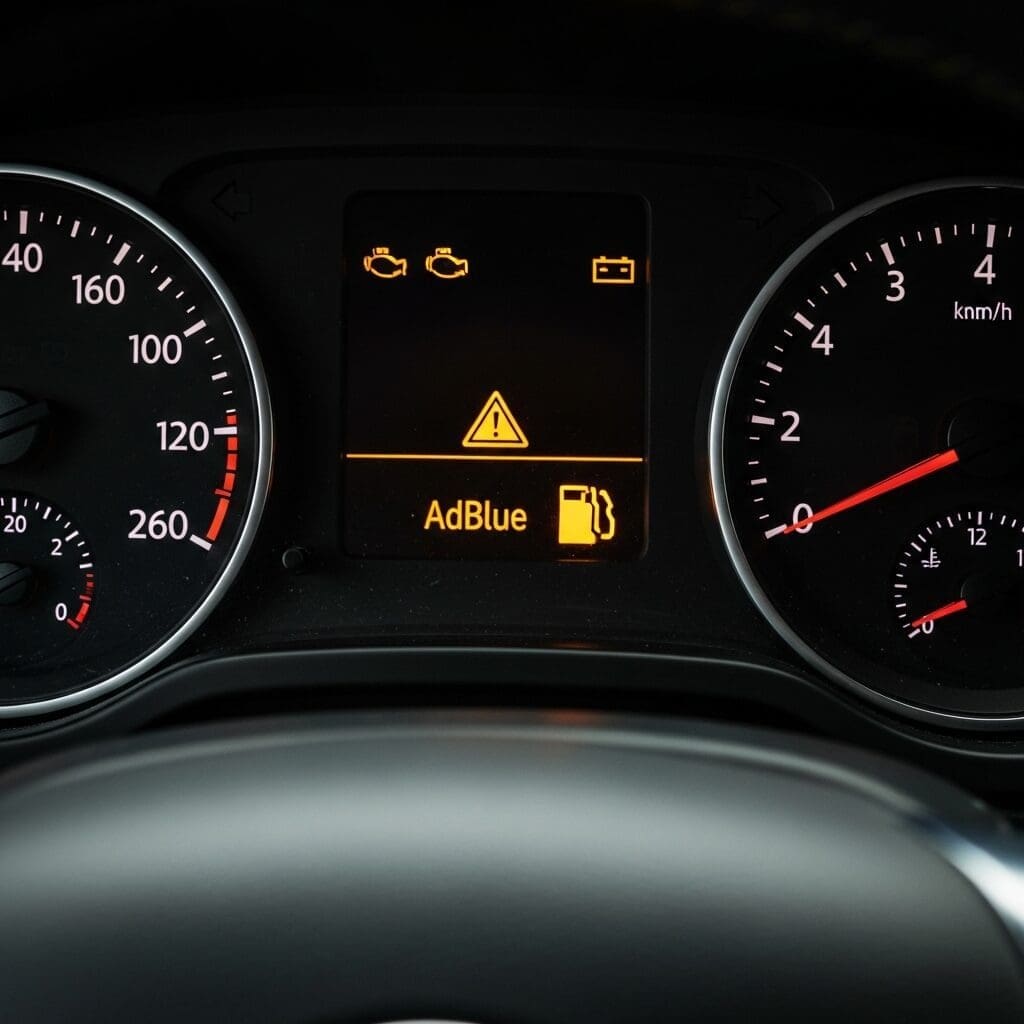
There is a point in a Mercedes AdBlue fault sequence where reset methods — manual or scanner-based — become ineffective. This is not a failure of the tool or the technique. It is how the system is designed to work.
Mercedes ECUs use a rolling fault counter for AdBlue-related faults. Each time a diagnostic monitoring cycle fails, the counter increments. Once the counter reaches a threshold, the no-start countdown begins. From that point, the ECU will not allow the countdown to be fully cleared by a simple fault code reset — it requires either a confirmed repair of the underlying fault, or a dealer-level coding procedure that confirms the repair has been carried out.
This is why drivers sometimes find that a scanner clears the countdown miles, starts the vehicle, and then the countdown reappears at a shorter value within hours. The counter rolled back to the logged position rather than being genuinely cleared.
At this point, there are two practical paths: address the specific hardware fault causing the counter to increment (replace the failing sensor, service the injector, repair the pump), or apply a software modification that tells the ECU to stop running the monitoring cycle altogether.
Our Honest Assessment
If the warning has returned three or more times after reset, or if the countdown is now below 500 km, the hardware fault has either not been fixed or it is not the kind of fault that can be fixed economically. Call us on 07312 051 114 for a straight-talking assessment of your options before spending more on parts.
For broader context on why AdBlue warning lights persist after topping up or resetting, the no-restart warning causes and fixes guide covers the full sequence in detail, including what each dashboard message means and which point you have reached in the countdown.
When Software Delete Becomes the Better Option
For some Mercedes owners — particularly those running high-mileage commercial vehicles or older cars that have already seen one or two rounds of AdBlue component replacement — the calculation eventually tips toward a permanent software solution rather than continued repair.
A software AdBlue delete modifies the ECU so that it stops monitoring and reporting the AdBlue and SCR system. Once applied, the vehicle starts normally with no countdown, no warning lights, and no fault codes relating to the AdBlue circuit. The physical hardware remains in place — only the ECU logic is changed.
This is not the right answer for every Mercedes driver. For a newer vehicle still under warranty, or one with an active maintenance contract, repair is typically the correct route. But for older out-of-warranty vehicles where the same system has failed twice, or where the fault code is pointing at a component that costs more to replace than the vehicle is worth, the software route is worth a conversation.
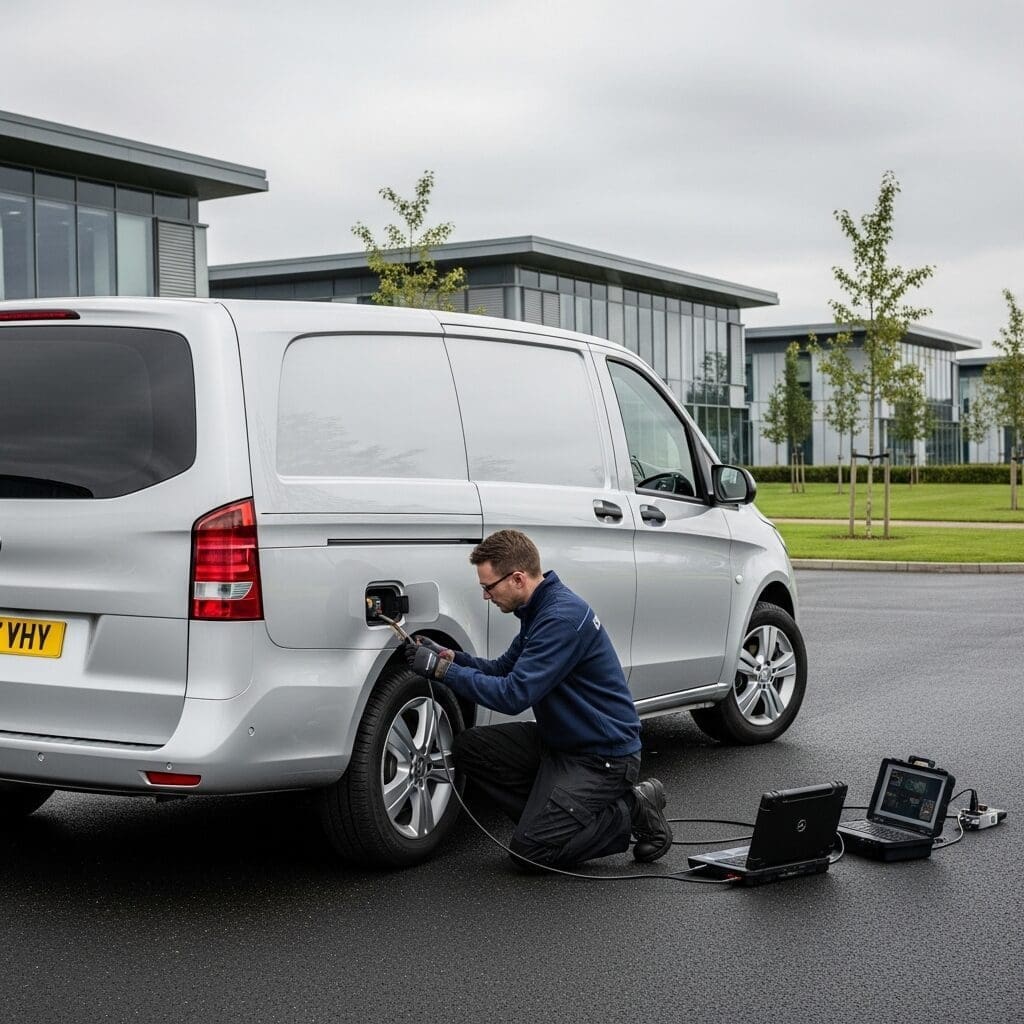
Our mobile team attends at your location — home, depot, or roadside — and completes the modification without a garage visit. For most Mercedes models, the job takes between one and two hours. We give a fixed price before any work begins.
Mercedes AdBlue Warning That Won’t Clear?
Call our team for a no-obligation assessment. We will tell you what options actually make sense for your vehicle — and if a software solution is the right call, we can usually attend the same day.
Frequently Asked Questions
Can you reset Mercedes AdBlue without a scanner?
Sometimes, yes — if the warning is purely from low fluid. Refill the tank, then run a few ignition cycles without starting or take a steady motorway drive. If the fault is from a failing sensor, injector, or pump, the warning will return within a few drive cycles regardless of whether you use a scanner or not. The tool cannot fix the underlying hardware fault.
Why does my Mercedes AdBlue warning keep coming back after reset?
Because the hardware fault causing the warning has not been repaired. Each time the ECU runs its diagnostic monitoring cycle, it finds the same discrepancy — too little dosing, an out-of-range sensor reading, or insufficient pump pressure — and logs the fault again. Clearing the code removes the log but not the fault condition.
What is fault code P1BC300 on a Mercedes?
P1BC300 is a Mercedes-specific code indicating a NOx sensor circuit malfunction. It typically appears alongside an AdBlue system warning and points to an issue with the upstream or downstream NOx sensor signal being outside the expected calibration range. Simply clearing the code will not fix the sensor. An adaptation drive is often needed after replacement to allow the ECU to recalibrate.
My Mercedes countdown is now below 500 km — can I still fix it?
Yes, but you need to act quickly. Once the countdown is below 500 km it means the fault has been logged multiple times and the ECU is not accepting simple resets. Call us on 07312 051 114 and we will tell you what options are realistic for your vehicle, including whether a same-day attendance is possible.
Is software AdBlue delete the same as a reset?
No. A reset clears the logged fault code temporarily but does nothing to the ECU logic — the next monitoring cycle will log it again. A software delete modifies the ECU so that it stops running the AdBlue monitoring cycle altogether. The result is permanent: no countdown, no warnings, no recurring fault codes from the AdBlue system.


