
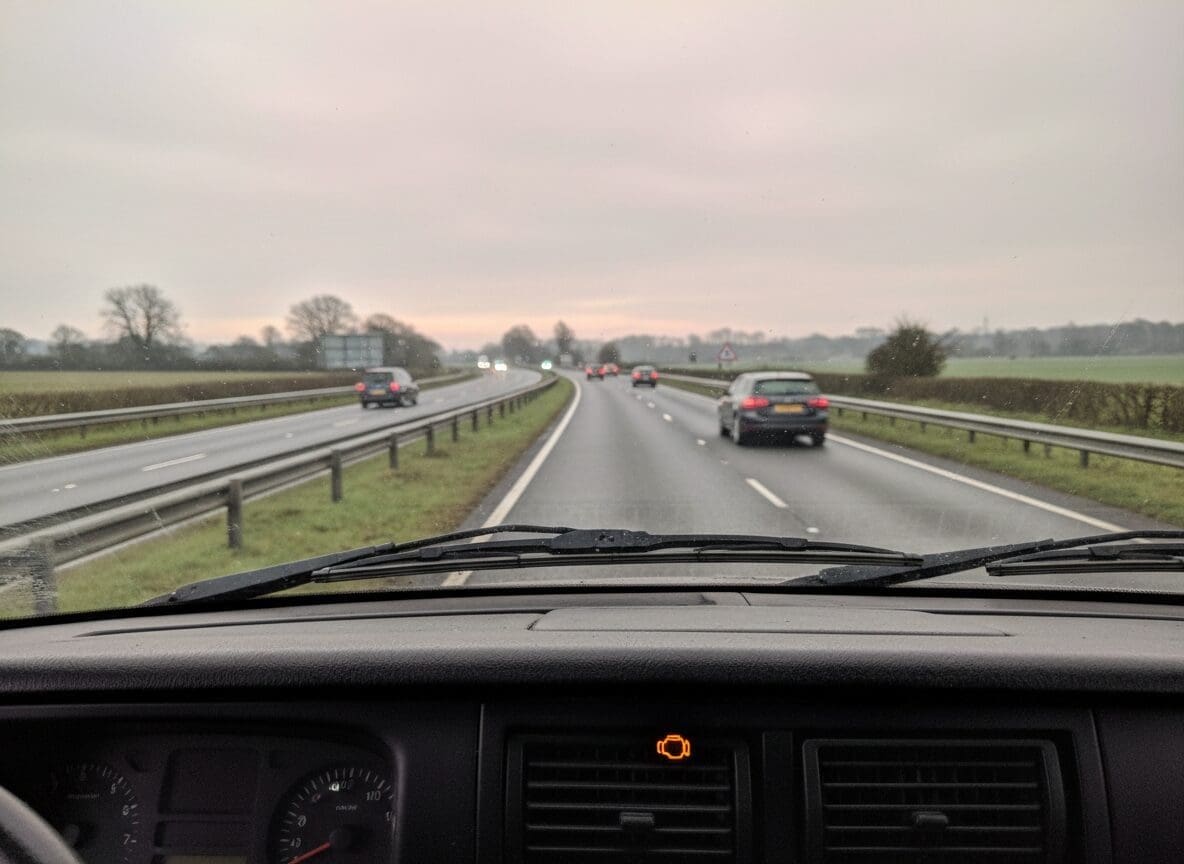
Nissan’s diesel range — including the Navara pickup, Qashqai crossover, and NV400 van — all use Selective Catalytic Reduction (SCR) systems to meet Euro 6 emissions standards. These systems use AdBlue to reduce NOx in the exhaust. When the system detects a fault, a warning light appears on the dashboard. If the fault is serious enough, the vehicle begins counting down to an engine lockout.
This guide covers the most common causes of the Nissan Navara and Qashqai AdBlue fault, why refilling the tank often does not help, and what you can do to resolve it properly.
Quick answer: What causes the Nissan AdBlue fault warning?
A Nissan AdBlue fault warning usually means the SCR system has detected a problem with a component — most commonly the NOx sensor, the AdBlue dosing injector, or the pump. In some cases it is a software issue with the dosing control module. Refilling the AdBlue tank will clear a low-fluid warning but will not resolve a system fault. The vehicle needs a diagnostic scan to identify the specific cause.
- Which Nissan models are affected
- Common causes of the Nissan AdBlue fault
- Why the AdBlue light stays on after refilling
- The no-restart countdown explained
- What the Nissan Navara recall means
- Your repair options
- Frequently asked questions
Which Nissan models are affected by AdBlue faults?
AdBlue system faults have been reported across several Nissan diesel models in the UK:
Nissan Navara D23 (2015 onwards)
The Navara D23 2.3 dCi is one of the most commonly affected. AdBlue fault warnings, failed resets after refilling, and the U059E NOx sensor code are all frequently reported. The Navara is a working truck, and owners notice the fault quickly because the impact on vehicle availability is immediate.
Nissan Qashqai (2017 onwards — diesel variants)
The Qashqai’s 1.5 and 1.6 dCi diesel engines on Euro 6 compliant models use AdBlue. Owners report warning lights that refuse to clear after a top-up, and in some cases countdown warnings appearing after the light has been on for some time.
Nissan NV400 and Primastar vans
The NV400 (Nissan’s large panel van, shared with Vauxhall Movano and Renault Master) and the Primastar medium van have both seen AdBlue system faults in their Euro 6 forms. As fleet vehicles, a no-start condition causes direct operational impact.
Common causes of the Nissan Navara AdBlue fault
NOx sensor failure (fault code U059E)
NOx sensor faults are among the most frequently reported causes of AdBlue system issues on Nissan diesel vehicles. The Navara D23 is specifically associated with fault code U059E, which points to a communication or signal fault in the NOx sensor circuit. When the NOx sensor produces an implausible reading, the ECU cannot verify that emissions reduction is working, and the system responds with a warning and — if unresolved — a countdown.
Blocked or underperforming AdBlue injector
The dosing injector sprays AdBlue into the exhaust at precisely controlled intervals. Because it sits in a high-heat environment, AdBlue crystallisation is a real risk — particularly for vehicles that frequently take short trips, where the system never fully reaches operating temperature. A partially blocked injector reduces dosing accuracy, which the ECU interprets as an SCR efficiency problem.
AdBlue level sensor fault
The level sensor inside the AdBlue tank reports the fluid level to the ECU. If it reads incorrectly, topping up the tank will not clear the warning — the system still believes the tank is empty. This explains one of the most common complaints from Nissan owners: the AdBlue light stays on even after refilling.
Dosing pump fault
The pump pressurises the AdBlue and delivers it to the injector. A failing pump produces intermittent fault codes, often alongside a system warning. In some cases the pump fails to build pressure at all; in others it operates inconsistently, triggering efficiency warnings even when fluid is present and the injector is clear.
Why the AdBlue light stays on after refilling
This is one of the most common questions from Nissan owners experiencing an AdBlue fault. You have topped up the tank. The warning is still there. The countdown, if anything, seems to be getting closer.
The explanation is straightforward: the AdBlue warning light has two possible meanings. One is simply a low-fluid alert — fill the tank, the light goes off. The other is a system fault warning — something in the SCR system has failed or produced an out-of-range reading. In the second scenario, adding more fluid makes no difference, because the fluid level is not the problem.
Once the no-restart countdown has begun, only a confirmed repair combined with a proper diagnostic reset will stop it. The countdown does not stop itself, and it does not reset when you add fluid.
The Nissan Navara SCR recall — what it means
In the background to many Navara AdBlue faults is a specific technical history. Nissan agreed with the German market surveillance authority to issue a software update for the SCR system in the Navara 2.3 dCi EU6b. The update was designed to improve the SCR system’s target efficiency in online dosing mode, resulting in better real-world emissions performance.
What this tells you practically is that some Navara AdBlue fault issues are software-related rather than component-related. If your vehicle has not received this update, or if the calibration has drifted, the system may trigger fault warnings without a physical component failure. Checking whether the software update has been applied is a useful first step in diagnosis.
Your options for resolving the Nissan AdBlue fault
Targeted component replacement
Once the specific faulty component is identified — NOx sensor, injector, pump, or level sensor — it is replaced and the SCR system is reset. A proper diagnostic reset is required alongside the repair to release any active countdown. Without the reset, the warning will persist even after the fault is fixed.
Software update or ECU recalibration
Where the fault is software-related, an updated ECU calibration resolves the issue. This is particularly relevant for the Navara D23 where Nissan’s own SCR software update may not have been applied. A diagnostic session with the correct tooling can identify whether a calibration update is needed.
Permanent AdBlue delete
For Nissan owners who want to permanently eliminate AdBlue fault issues, our mobile AdBlue delete service removes the SCR system dependency from the ECU. The vehicle runs normally — without AdBlue warnings, countdown messages, or SCR system faults reoccurring. All work is done at your location, so there is no need for a main dealer booking or a recovery truck.
Nissan AdBlue fault? We diagnose and fix at your location.
Mobile AdBlue fault diagnosis and repair for Nissan Navara, Qashqai, NV400 and Primastar — across the Midlands and beyond. No recovery, no dealer queues.
Frequently asked questions
Why won’t the AdBlue light reset on my Nissan after refilling?
If a system fault is active, refilling the AdBlue tank will not clear the warning. The light stays on because the SCR system has detected a component problem — most commonly the NOx sensor, dosing injector, or pump. The fault needs diagnosing and resolving, not just a fluid top-up.
What fault code is associated with Nissan AdBlue problems?
The Nissan Navara D23 commonly produces fault code U059E, which relates to the NOx sensor circuit. Other common codes involve SCR catalyst efficiency faults and AdBlue dosing errors depending on which component has failed. A diagnostic scan will identify the specific code present.
Can I drive a Nissan with an AdBlue warning light?
You can drive while a countdown is active, but the situation is urgent. If the countdown reaches zero, the engine will not restart after you next switch it off. Treat any Nissan AdBlue fault — particularly one with a countdown — as a priority repair.
Does the Nissan Navara have a known AdBlue system fault?
Yes. Nissan agreed with German market surveillance authorities to implement a software update for the SCR system in the Navara 2.3 dCi EU6b to improve real-driving emissions performance. Some Navara AdBlue faults are therefore software-related. A diagnostic check can confirm whether the update has been applied and whether hardware faults are also present.


